

Company Overview
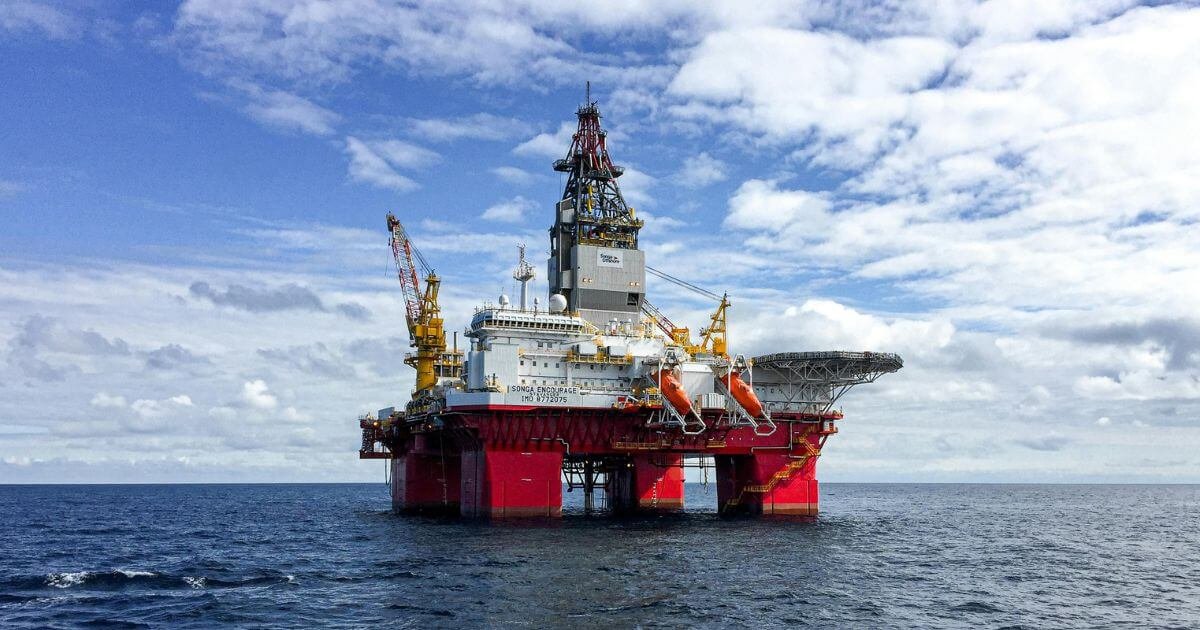
Shell is one of the world’s largest energy companies, operating complex industrial assets such as refineries, rigs, and large-scale processing facilities. In these environments, even short unplanned outages can be extremely costly, and operational reliability is directly tied to safety, production volume, and profitability.
Business Challenge
Shell’s operational reality includes large fleets of rotating equipment and critical infrastructure where failures can cascade quickly. The key problems Shell needed to solve were:
- Unplanned downtime: Industrial assets can fail unexpectedly, causing production interruptions, deferred output, and higher repair costs.
- Reactive maintenance cost: Traditional schedules miss subtle early-warning signals, leading to emergency fixes that are expensive and disruptive.
- Scale and complexity: Monitoring and maintaining equipment across many sites globally creates a data volume too large for humans to analyze manually.
- Reliability and safety: In oil & gas environments, equipment reliability impacts not only cost but also operational risk and safety outcomes.
AI Solution: Predictive Maintenance Using Machine Learning
Shell implemented AI-based predictive maintenance to detect anomalies early, prioritize interventions, and reduce failures before they lead to shutdowns. A major part of this effort involved scaling predictive monitoring across a large base of equipment globally.
Key AI Components:
1. ML Models for Failure Prediction and Anomaly Detection
Shell used machine learning to analyze equipment telemetry and operational signals to identify irregular patterns that indicate potential failure conditions, enabling intervention before breakdowns.
2. Enterprise-Scale Monitoring Across 10,000+ Assets
Shell scaled its predictive maintenance program to monitor 10,000 pieces of equipment globally, indicating a mature approach that goes beyond pilots into enterprise deployment.
3. Cloud-Based Predictive Maintenance Platform
Shell’s predictive maintenance efforts include a cloud platform approach to centralize analytics, scale model deployment, and operationalize insights across sites.
4. Reliability and Maintenance Workflow Integration
A critical element is operationalization: predictive insights are used to plan maintenance more efficiently, avoid disruptions, and extend asset life—turning analytics into real-world action.
Implementation Process
Phase 1: Establish predictive maintenance capability
Shell developed predictive maintenance practices to address deferment and unplanned downtime, recognizing that the data volume generated by equipment is too large for human monitoring alone.
Phase 2: Scale through platformization
Shell expanded from early predictive approaches into scalable systems capable of monitoring thousands of assets with centralized analytics, enabling consistent rollout across sites.
Phase 3: Operational integration and continuous improvement
With predictive maintenance embedded into workflows, models and processes can be improved over time as more operational data is collected and outcomes are measured.
Measurable Business Results
Across sources describing Shell’s scaled predictive maintenance program, reported outcomes include:
- 20% reduction in unplanned downtime (reported in third-party case coverage of Shell’s program).
- 15% reduction in maintenance costs (reported in the same third-party coverage).
- GBP 1 million+ annual savings per major site (reported in third-party case coverage).
- Scaling to 10,000+ assets monitored globally, demonstrating enterprise-level deployment rather than a limited pilot.
(Note: the quantified % savings above are reported by third-party case coverage; Shell’s own published materials emphasize reduced interruptions, better resource use, avoiding unplanned downtime, and extending asset life.)
Technology Stack
Shell’s approach combines industrial data streams with machine learning analytics and a scalable platform model:
- Machine learning for anomaly detection and predictive failure signals.
- Cloud-based predictive maintenance platform to aggregate signals and operationalize insights.
- Industrial telemetry / sensor data (high-volume time-series operational signals) feeding analytics workflows.
Key Success Factors
1. Strong focus on ROI-critical assets
Predictive maintenance delivers the biggest returns when applied to high-impact equipment where downtime is expensive and failure cascades are disruptive.
2. Scaling beyond pilots
Monitoring 10,000+ assets is a strong indicator Shell treated predictive maintenance as an operating capability, not a one-off innovation experiment.
3. Workflow integration (insights → action)
Predictive maintenance only works commercially when alerts and predictions directly inform maintenance decisions and execution plans.
4. Continuous improvement loop
As more real operating data is collected, models can be refined and recommendations become more reliable and actionable over time.
Lessons Learned
What Worked:
- Using AI to reduce production interruptions by detecting faults earlier than traditional maintenance schedules.
- Centralizing and scaling predictive analytics so multiple sites can benefit from shared learning and consistent deployment.
- Treating predictive maintenance as both a technology program and an operational transformation (process + people + platform).
Challenges Overcome:
- Handling massive volumes of equipment data that are impractical for manual monitoring.
- Driving adoption in industrial operations where trust, safety, and reliability requirements are extremely high.
- Scaling consistently across sites with different asset types, operating conditions, and maintenance practices.
Future AI Roadmap
Shell’s published materials describe predictive maintenance as part of a broader journey toward global, scalable reliability practices focused on reducing deferment and unplanned downtime. The natural next steps in such programs typically include expanding asset coverage, improving predictability windows (how early failures are detected), and automating recommended actions into maintenance planning.
Why This Case Study Matters
1. It’s a high-credibility industrial AI story.
This is AI applied to mission-critical, safety-sensitive infrastructure where reliability is measurable and operational impact is clear.
2. It includes enterprise-scale adoption.
Monitoring 10,000+ assets is a strong “scale proof” for AI implementation in complex environments.
3. It provides quantifiable outcomes that clients care about.
Downtime reduction and maintenance cost savings are among the most compelling ROI narratives for industrial AI programs.
4. It maps cleanly to common client needs.
You can use this case study when selling:
- predictive maintenance systems
- anomaly detection for IoT/time-series data
- industrial ML platforms
- reliability engineering analytics
- asset performance management (APM)
Summary
Shell is a strong real-brand AI case study because it demonstrates how machine learning and predictive analytics can be operationalized at global scale in industrial operations. By turning high-volume equipment telemetry into early warnings and maintenance actions, Shell’s predictive maintenance approach shows how AI can reduce downtime, optimize cost, and improve reliability in complex, safety-critical environments.





 AI/ML Strategy and Consulting
 Data Science And Data Analytics
 Generative AI
 AI Consulting Services
 AI Automation Solutions
 API Integration