

Company Overview
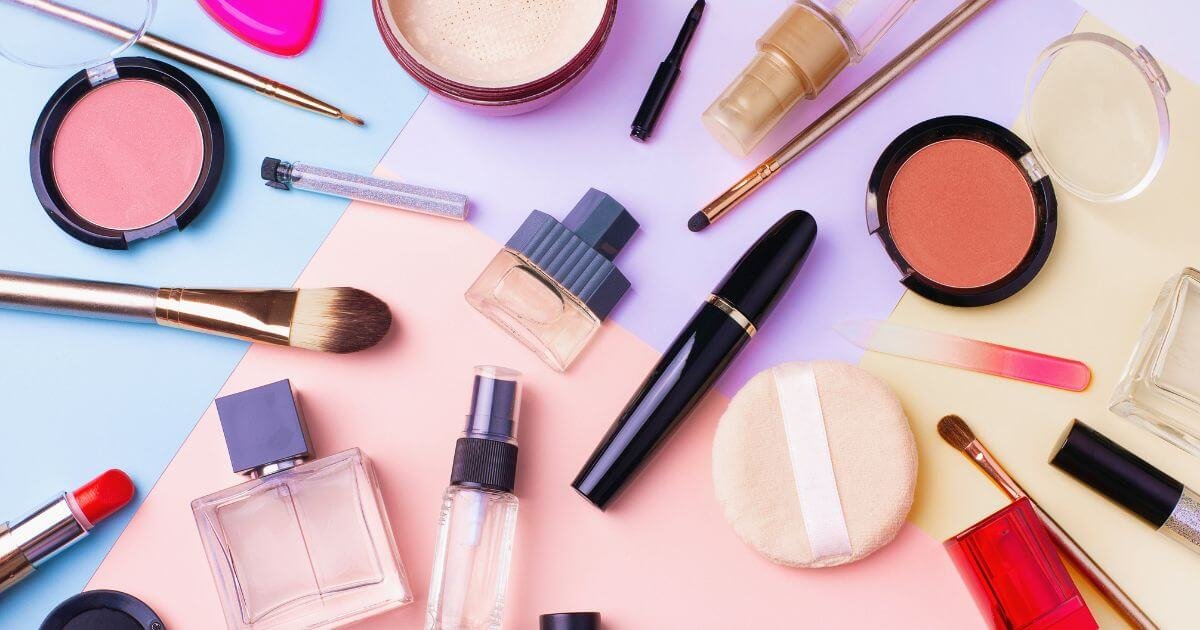
L’Oréal Groupe is the world’s largest beauty company, operating across skincare, haircare, makeup, fragrance, dermatological beauty, and professional salon products. The company manages a broad portfolio of global brands and serves consumers across ecommerce, retail, professional channels, and direct digital experiences. In recent years, L’Oréal has positioned itself as a beauty tech leader, using AI not only for marketing and content creation, but also for personalization, virtual try-on, and more responsive digital commerce.
What makes L’Oréal especially compelling as an AI case study is that its transformation is recent and highly relevant to modern enterprise use cases. In 2025 and 2026, the company publicly highlighted the use of generative AI and digital beauty tools to accelerate content production, improve campaign performance, and deepen customer engagement across brands and markets. This makes L’Oréal a strong example of a global consumer brand using AI in ways that are commercially practical, measurable, and scalable.
Business Challenge
L’Oréal faced a challenge common to global consumer brands but amplified by the complexity of beauty marketing. The company must create high volumes of localized, brand-compliant content across many countries, product lines, languages, and channels. Traditional creative production can be too slow and too expensive when teams are expected to react quickly to market trends, platform changes, and consumer expectations.
At the same time, consumers increasingly expect personalized and interactive shopping journeys. In beauty, discovery and purchase are highly visual and often depend on confidence: how a shade looks, how a product fits into a routine, or whether a campaign feels culturally relevant. That creates pressure to produce more content, more variations, and more targeted digital experiences without losing brand control.
L’Oréal also needed to balance innovation with brand safety and ethical boundaries. In beauty marketing, realism and trust matter. That means the company could not simply generate synthetic content without guardrails; it needed a system that accelerated work while preserving quality, compliance, and consumer trust.
AI Solution: Generative AI, Beauty Tech, and Data-Driven Content Operations
L’Oréal responded by building a more integrated AI-enabled marketing and consumer experience model. A key part of this strategy is CREAITECH, the company’s in-house generative AI beauty content lab, supported by tools such as Google’s Imagen 3 and Gemini for creative workflow acceleration.
Key AI Components
1. CREAITECH: Generative AI Content Production
L’Oréal uses CREAITECH to help marketing teams develop concepts, storyboards, packaging redesign ideas, and product shots more quickly. Instead of replacing creative teams, the system acts as an accelerator that reduces production friction in the early and middle stages of content development. According to recent reporting, the technology has helped reduce turnaround times from weeks to days while also trimming costs.
2. Scalable Product Shot and Background Generation
Generative AI has proven especially useful for product imagery and campaign asset localization. Reporting on L’Oréal’s AI work notes that the technology has been effective for scaling product shots and background production, reducing the resources required to create large volumes of brand assets. This is highly valuable in beauty because visual asset variation is central to merchandising, campaign localization, and omnichannel marketing.
3. AI-Enhanced Search and Performance Marketing
L’Oréal also applied AI to paid search and digital campaign execution. In a 2025 Google case study, L’Oréal used AI-powered search marketing to surface new high-intent queries and reach audiences more efficiently. The results were highly measurable, with stronger conversion performance and lower acquisition costs.
4. Virtual Try-On and Consumer Beauty Tech
Beyond content generation, L’Oréal has also expanded AI-powered and AR-enabled consumer experiences through beauty tech tools. One reported result was a 150% increase in virtual try-ons, showing that consumers are actively engaging with AI-assisted product discovery experiences. This matters because in beauty, try-on, confidence, and personalization directly affect conversion and return behavior.
Implementation Process
L’Oréal’s AI implementation appears to have followed a disciplined enterprise approach rather than a loose experimentation model. First, the company established internal AI capability through a dedicated content lab structure, which gave it a controlled environment for testing and scaling generative AI workflows.
Second, L’Oréal selected use cases where AI could deliver immediate operational value. Rather than starting with vague innovation goals, it focused on high-volume creative processes such as concept generation, storyboard creation, packaging visualization, and product-shot variation. These are areas where cycle-time reduction and cost efficiency are easy to observe.
Third, the company added governance and brand boundaries. One particularly important detail is that L’Oréal stated it does not use generative AI to create images of people for marketing campaigns or external communications, including lifelike face, body, hair, and skin imagery for products. That decision shows a practical and risk-aware implementation model: use AI where it adds speed and flexibility, but restrict it where trust and representation risks are higher.
Finally, L’Oréal extended AI beyond internal production into consumer-facing and performance-marketing workflows. This created a more complete AI system in which content creation, search performance, and beauty-tech engagement all reinforce one another.
Measurable Business Results
One of the strongest parts of L’Oréal’s case is that recent years provide concrete performance outcomes rather than just strategic language.
In content operations, L’Oréal reported that generative AI reduced content turnaround times from weeks to days. For a global brand with high-volume creative demand, that is a major operational gain because it shortens campaign cycles, speeds experimentation, and helps teams respond faster to cultural and commercial moments.
The company also stated that these workflows trimmed costs, especially by reducing the resources needed for concept development and product-shot/background production. Even where exact enterprise-wide cost figures were not publicly broken out, the direction of value is clear: less manual production effort, more asset variation, faster output.
L’Oréal’s AI-enabled search marketing results are even more explicit. According to Google’s 2025 case study, the company achieved a 67% increase in click-through rate, a 31% decrease in cost per conversion, and a 2x higher conversion rate compared with earlier campaign performance. The same case reports a 27% lift in conversion value and a 20% boost in return on ad spend, showing that AI improved both media efficiency and commercial output.
At the product-category level, the impact was also meaningful. In the same campaign context, glycolic products reportedly saw double the conversions, while serums saw a 70% increase. These are strong signals that AI did not just improve general reach; it improved the quality of audience matching and the relevance of campaign delivery.
On the consumer-experience side, L’Oréal was reported to have seen a 150% increase in virtual try-ons as customers increasingly engaged with immersive beauty tools. That matters because beauty is one of the most experience-dependent ecommerce categories. Virtual try-on reduces uncertainty, supports shade selection, and creates a stronger bridge between product discovery and purchase.
Technology Stack
L’Oréal’s AI transformation appears to rely on a layered technology stack:
- CREAITECH, the internal generative AI beauty content lab.
- Google Imagen 3 and Gemini multimodal models for creative ideation and content workflow support.
- Performance marketing AI tools such as Google AI Max for search optimization and high-intent audience capture.
- AR / virtual try-on technologies built into L’Oréal’s beauty-tech ecosystem and digital commerce experiences.
- Data-driven customer experience systems that connect content, media, and consumer interaction across channels.
The strength of this stack is not just technical variety. It is that each layer supports a clear commercial workflow: content production, campaign optimization, or shopping confidence.
Key Success Factors
Several factors appear to explain why L’Oréal’s AI implementation has gained momentum.
First, the company focused on real production bottlenecks. It targeted content creation and campaign localization, both of which are high-volume, repeatable, and expensive in global brand marketing.
Second, it adopted AI with guardrails. By setting limits around photorealistic AI-generated human imagery in external campaigns, L’Oréal protected trust while still accelerating internal creative and product-visual workflows.
Third, it connected AI to performance metrics. Too many AI initiatives stay at the demo level. L’Oréal tied AI to campaign outcomes such as CTR, conversion rate, cost per conversion, and ROAS, which made the value easy to observe.
Fourth, it treated AI as a system, not a gimmick. Content generation, search optimization, and try-on experiences all support the same larger goal: making beauty marketing and commerce more responsive, personalized, and scalable.
Lessons Learned
A key lesson from L’Oréal is that generative AI creates the most value when applied to modular, repeatable, high-volume creative work. Product shots, concepts, packaging variations, and localized assets are ideal because they require scale and speed, but still benefit from human curation.
Another lesson is that AI adoption works better when the company is clear about what it will not automate. L’Oréal’s restriction on AI-generated people in marketing campaigns is important because it shows that trust and governance can coexist with innovation.
A third lesson is that marketing AI should be measured in commercial terms. Improvements like 67% CTR growth, 31% lower cost per conversion, and 20% higher ROAS are far more persuasive than vague claims about creativity.
Future AI Roadmap
Based on the company’s recent direction, L’Oréal is likely to continue expanding AI across marketing production, beauty-tech personalization, and digital consumer engagement. The company’s broader beauty-tech positioning suggests deeper integration between generative content systems, virtual experiences, and data-driven campaign execution in the years ahead.
Summary
L’Oréal is a strong recent AI case study because it shows how a global brand can use generative AI and beauty tech in 2025 and 2026 to create real business value. Its AI strategy is not limited to experimentation; it is producing faster content cycles, lower production friction, stronger campaign performance, and higher consumer interaction through virtual try-on and targeted digital experiences.
The clearest outcomes include reducing content turnaround from weeks to days, achieving a 67% higher click-through rate, cutting cost per conversion by 31%, doubling conversion rate in some campaign setups, increasing conversion value by 27%, boosting ROAS by 20%, and driving a 150% increase in virtual try-ons. Together, these results make L’Oréal one of the better recent examples of AI delivering measurable value in enterprise marketing and digital commerce.



 AI/ML Strategy and Consulting
 Data Science And Data Analytics
 Generative AI
 AI Consulting Services
 AI Automation Solutions
 API Integration