
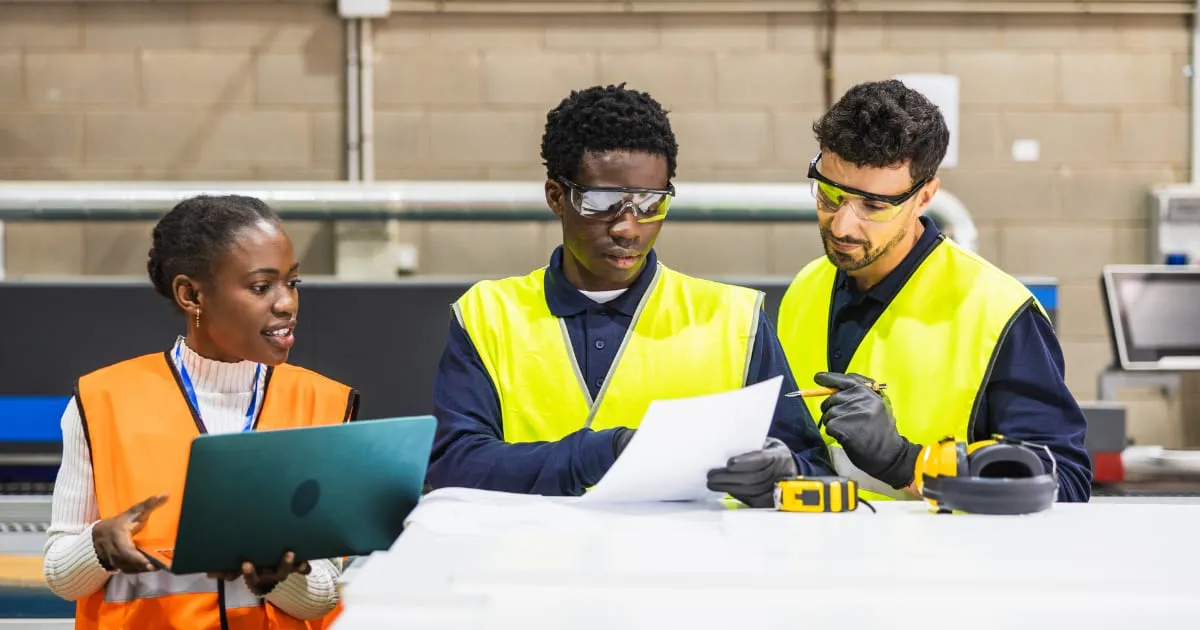
Production planning has always been complex. Balancing customer demand, machine availability, material supply, and labor capacity requires constant adjustment. Spreadsheets and static ERP schedules cannot keep up when conditions change hourly.
- AI enables real-time rescheduling, adjusting plans within seconds to minimize cascading delays.
- AI augments planners with demand sensing, constraint based scheduling, scenario simulation, and continuous optimization to improve accuracy and reduce firefighting.
- Choose tools by scheduling complexity, integration needs, and team maturity to match your factory's scale and implementation capacity.
- Expect measurable gains: higher on-time delivery, tighter schedule adherence, lower WIP, reduced changeovers, and improved planner productivity.
AI tools for production planning solve this by processing thousands of variables simultaneously. They adjust schedules in real time when a machine goes down, a shipment arrives late, or a rush order comes in. The result is higher on-time delivery, less idle time, and fewer missed commitments.
Manufacturers still relying on manual planning methods lose hours each week to rescheduling and firefighting. Those using intelligent scheduling software report up to 30% improvement in schedule adherence and significant reductions in work-in-progress inventory. The gap between manual and AI-driven planning widens with every disruption.
How AI Improves the Production Planning Process
AI does not replace your planners. It gives them superpowers. Here is how intelligent systems enhance each stage of the planning cycle:
- Demand sensing – AI models analyze sales history, market signals, and external data to forecast demand more accurately than traditional methods, reducing overproduction and stockouts.
- Constraint-based scheduling – Algorithms evaluate machine capacity, tooling availability, labor shifts, and material lead times to generate feasible schedules that respect every operational limit.
- Real-time rescheduling – When disruptions occur, the system recalculates the optimal plan within seconds, minimizing cascading delays across the production floor.
- Scenario simulation – Planners can test what-if scenarios before committing to a schedule, comparing outcomes for different order priorities, shift configurations, or maintenance windows.
- Continuous optimization – The system learns from actual production outcomes, refining its models and improving schedule quality with every planning cycle.
This combination of speed, accuracy, and adaptability is why AI-driven production planning is becoming standard practice rather than a competitive luxury.
10 AI Tools for Production Planning Worth Evaluating
1. o9 Solutions — AI-Powered Integrated Planning Platform
o9 Solutions delivers an enterprise-grade planning platform that connects demand forecasting, supply planning, and production scheduling into a single AI-driven workflow. Its knowledge graph technology links data across your entire value chain for faster, more accurate decisions.
Large manufacturers in consumer goods, automotive, and industrial sectors use o9 to replace fragmented planning processes. The platform handles complex multi-site, multi-product scheduling with real-time visibility. Its scenario planning engine lets teams model disruptions and evaluate trade-offs before committing resources.
2. Kinaxis RapidResponse — Concurrent Planning for Complex Supply Chains
Kinaxis RapidResponse enables concurrent planning, where supply, demand, and production plans update simultaneously rather than sequentially. Its AI and machine learning capabilities enhance demand sensing, inventory optimization, and production sequencing.
The platform excels in industries with complex bills of materials and long lead times, such as aerospace, automotive, and life sciences. Planners see the downstream impact of every change instantly. Kinaxis helps organizations respond to volatility without sacrificing schedule stability or customer commitments.
3. Siemens Opcenter APS — Advanced Planning and Scheduling
Siemens Opcenter Advanced Planning and Scheduling provides detailed finite-capacity scheduling for discrete and process manufacturing. It considers machine capabilities, tooling constraints, operator skills, and sequencing rules to generate optimized production plans.
The tool integrates tightly with Siemens MES and PLM platforms. Manufacturers running complex job shops or mixed-mode production benefit most from its granular scheduling logic. Opcenter APS reduces setup times, balances workloads across resources, and improves throughput by eliminating scheduling conflicts before they reach the floor.
4. PlanetTogether — Visual Scheduling with AI Optimization
PlanetTogether focuses on making production scheduling visual and intuitive. Its drag-and-drop Gantt charts let planners see the entire production landscape at a glance, while AI optimization engines suggest the most efficient sequences and resource allocations.
The platform integrates with major ERP systems including SAP, Oracle, and Microsoft Dynamics. Midsize manufacturers appreciate PlanetTogether’s balance of power and usability. Planners can override AI recommendations when operational knowledge demands it, maintaining human control while benefiting from algorithmic speed.
5. Fabrico — AI-Native Production Management
Fabrico is a newer platform built from the ground up with AI at its core. It combines production scheduling, job tracking, inventory management, and shop floor communication in a single system designed for small to midsize manufacturers.
The tool uses machine learning to predict job completion times, flag potential delays, and recommend schedule adjustments proactively. Its modern interface reduces training time for planners transitioning from spreadsheets or legacy systems. Fabrico targets manufacturers who want AI-driven planning without enterprise-scale complexity or cost.
6. Dassault Systèmes DELMIA Quintiq — Large-Scale Planning Optimization
DELMIA Quintiq by Dassault Systèmes handles planning and scheduling challenges at massive scale. It uses advanced optimization algorithms to solve problems involving thousands of orders, hundreds of machines, and multiple facilities simultaneously.
The platform serves industries where planning complexity is extreme — logistics, defense, rail, and large-scale manufacturing. Quintiq’s solver engine evaluates millions of possible schedules and selects the one that best meets your defined objectives, whether that is maximizing throughput, minimizing changeovers, or hitting delivery dates.
7. Pelico — AI-Driven Factory Execution Intelligence
Pelico bridges the gap between static production plans and what actually happens on the factory floor. Its AI platform connects to ERP and MES systems, identifies execution risks in real time, and recommends corrective actions to keep production on track.
The tool is particularly strong at detecting early warning signs of delivery delays and material shortages. Operations managers use Pelico’s dashboards to prioritize interventions where they will have the greatest impact. Manufacturers with complex multi-tier supply chains see immediate value from its proactive risk alerts.
8. Asprova — High-Speed Finite Capacity Scheduling
Asprova is a Japanese-origin scheduling engine known for its speed and precision in finite capacity planning. It generates detailed production schedules for thousands of operations in seconds, accounting for setup times, batch constraints, and resource dependencies.
The platform has a strong presence in automotive, electronics, and precision manufacturing across Asia and globally. Asprova integrates with most major ERP systems and supports multi-plant scheduling. Its rule-based engine combined with optimization algorithms gives planners fine control over sequencing logic while maintaining calculation speed.
9. Relex Solutions — Demand-Driven Production and Supply Planning
Relex Solutions applies AI to unify demand forecasting, inventory optimization, and production planning into a single adaptive workflow. Its machine learning models process point-of-sale data, promotional calendars, and external demand drivers to produce highly accurate forecasts.
The platform translates those demand signals into production requirements automatically, reducing the lag between market changes and factory response. Food and beverage, retail, and consumer goods manufacturers rely on Relex to cut waste from overproduction while maintaining high service levels. Its demand-driven approach ensures production aligns with what customers actually need.
10. MRPeasy — AI-Assisted Planning for Small Manufacturers
MRPeasy provides cloud-based manufacturing resource planning tailored for small businesses. It covers production scheduling, material requirements planning, inventory management, and procurement in an affordable, easy-to-use package.
The platform’s AI features assist with lead time estimation, capacity planning, and automatic rescheduling when priorities shift. MRPeasy does not try to compete with enterprise solvers. Instead, it gives small manufacturers with 10 to 200 employees a structured, intelligent planning system that replaces spreadsheets and manual tracking without overwhelming their teams or budgets.
Quick Comparison: 10 AI Tools for Production Planning
| Tool | Primary Strength | Best For | Company Size |
|---|---|---|---|
| o9 Solutions | Integrated value chain planning | Enterprise multi-site operations | Large enterprise |
| Kinaxis RapidResponse | Concurrent planning | Complex supply chains | Mid to large |
| Siemens Opcenter APS | Finite capacity scheduling | Discrete and process manufacturing | Mid to large |
| PlanetTogether | Visual scheduling + AI | ERP-connected manufacturers | Midsize |
| Fabrico | AI-native production management | Modern SMB manufacturers | Small to midsize |
| DELMIA Quintiq | Large-scale optimization | Extreme planning complexity | Large enterprise |
| Pelico | Execution risk detection | Multi-tier supply chains | Mid to large |
| Asprova | High-speed scheduling | Automotive and electronics | Mid to large |
| Relex Solutions | Demand-driven planning | CPG and food manufacturing | Mid to large |
| MRPeasy | Affordable MRP with AI | Small manufacturers | Small business |
How to Choose the Right AI Production Planning Tool
Start with the complexity of your scheduling problem. A job shop with hundreds of custom orders needs a different tool than a process manufacturer running continuous lines. Finite capacity schedulers like Opcenter APS and Asprova suit the first scenario. Demand-driven platforms like Relex suit the second.
Evaluate integration requirements carefully. Your planning tool must connect with your ERP, MES, and shop floor systems to deliver real-time value. Platforms like PlanetTogether and Kinaxis offer pre-built connectors for major ERP systems. Others may require custom integration work that extends your implementation timeline.
Match the tool to your team’s maturity. If your planners currently rely on spreadsheets, jumping to DELMIA Quintiq will overwhelm them. Start with a platform like Fabrico or MRPeasy that introduces AI-assisted planning gradually. Organizations with experienced planning teams and dedicated IT support can aim higher from the outset.
Measuring Results from AI-Driven Production Planning
Track specific metrics to prove the value of your investment and guide ongoing improvement:
- On-time delivery rate – The most direct measure of scheduling effectiveness. AI-driven planning typically improves this metric by 15% to 30% within the first year.
- Schedule adherence – Compare planned versus actual production sequences. Higher adherence means fewer disruptions and less firefighting for your operations team.
- Changeover and setup time – Intelligent sequencing groups similar jobs together, reducing time lost to machine changeovers and tooling swaps.
- Work-in-progress inventory – Better scheduling reduces the amount of partially completed work sitting on the floor, freeing cash and floor space.
- Planner productivity – Measure the time your team spends creating and adjusting schedules. AI tools should cut this effort dramatically, allowing planners to focus on exceptions and strategy.
Review these metrics monthly during your first year. Share improvements across the organization to build support for expanding smart manufacturing planning to additional lines and facilities.
What Is Next for AI in Production Planning
Autonomous planning is the direction the industry is heading. Future systems will not just recommend schedules — they will execute them, adjusting machine assignments and material flows without waiting for human approval on routine decisions.
Digital twins of entire factories will allow planners to simulate weeks of production in minutes. They will test the impact of new product introductions, supplier changes, and demand shifts before committing real resources. This removes guesswork from high-stakes planning decisions.
Generative AI will also reshape how planners interact with scheduling systems. Instead of navigating complex software interfaces, planners will describe what they need in plain language. The system will generate, compare, and refine production plans conversationally. Manufacturers adopting AI tools for production planning today are building the operational muscle for this autonomous future.
FAQs
AI tools for production planning use machine learning and optimization algorithms to create, adjust, and improve manufacturing schedules automatically, considering demand, capacity, materials, and constraints in real time.
Traditional ERP scheduling uses static rules and infinite capacity assumptions. AI production scheduling evaluates real-time constraints, learns from actual outcomes, and reschedules dynamically when disruptions occur.
Yes. Platforms like MRPeasy and Fabrico offer cloud-based, subscription-priced solutions designed specifically for small manufacturers, starting at accessible monthly rates with no heavy upfront investment.
Cloud-based tools for small and midsize manufacturers can go live in weeks. Enterprise platforms serving complex multi-site operations typically require three to six months for full deployment and integration.
Most manufacturers report 15% to 30% improvement in on-time delivery, significant reductions in planning time, and lower work-in-progress inventory within the first year of adopting automated production optimization.


 AI/ML Strategy and Consulting
 Data Science And Data Analytics
 Generative AI
 AI Consulting Services
 AI Automation Solutions
 API Integration