

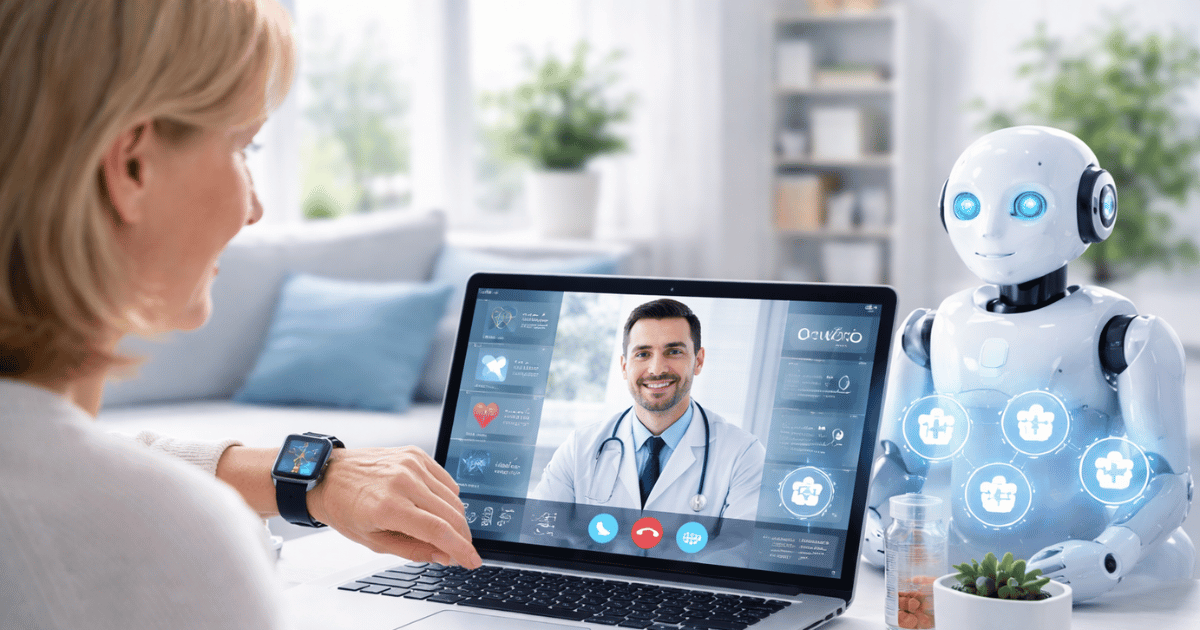
Telemedicine is no longer a backup plan. It has become a core delivery channel for healthcare organizations worldwide. But virtual visits alone are not enough to meet rising patient expectations.
- AI automates intake, triage, and real-time documentation, saving clinicians time and reducing administrative burden during telemedicine visits.
- Continuous remote monitoring and diagnostic support use biosensors and analytics to detect trends, alert teams, and improve chronic care outcomes.
- Select platforms that integrate with EHRs, ensure HIPAA compliance, fit workflows, and scale cost-effectively for reliable telehealth implementation.
AI tools for telemedicine now power smarter consultations, faster documentation, and more accurate remote diagnostics. They help providers deliver the same quality of care online that patients expect in person. This guide breaks down the platforms leading that transformation.
Why Telemedicine Needs AI to Scale Effectively
Virtual care adoption exploded in recent years. However, many providers still struggle with inefficiencies during remote consultations. Documentation takes too long. Patients fall through the cracks between visits. Diagnostic confidence drops without in-person exams.
AI closes those gaps. It automates pre-visit intake, generates clinical notes during calls, and monitors patients between appointments. Providers using AI-enhanced telehealth platforms report shorter visit times and better clinical outcomes.
The real value is not just convenience. It is the ability to extend high-quality, data-driven care to patients regardless of location. Rural communities, chronic disease patients, and mental health clients benefit the most.
How AI Enhances the Telemedicine Experience
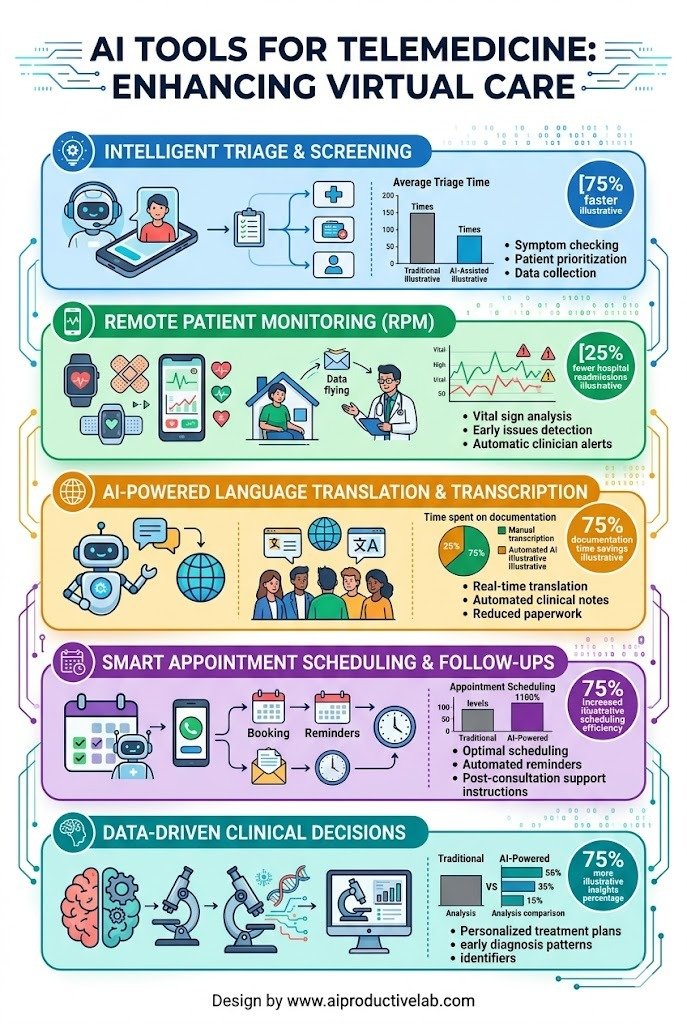
Understanding where AI fits into virtual care helps you evaluate the right tools. Here are the key areas where these platforms make an impact.
Smarter Pre-Visit Triage and Intake
AI-powered chatbots and voice agents collect patient symptoms before the appointment begins. They ask targeted questions, flag urgent concerns, and route patients to the right provider. This saves valuable consultation time for both parties.
Real-Time Clinical Documentation
Ambient AI listens during video consultations and generates structured notes automatically. Providers stay focused on the patient instead of typing into a screen. Notes are ready for review within seconds after the visit ends.
Remote Patient Monitoring Between Visits
AI analyzes data from wearables and connected devices continuously. It detects trends, alerts care teams to anomalies, and triggers follow-up actions. This keeps chronic disease patients stable without requiring frequent in-person visits.
Diagnostic Support During Virtual Consultations
AI tools analyze images, lab results, and patient history in real time during calls. They provide differential diagnosis suggestions and flag potential risks the provider might otherwise miss. This boosts clinical confidence in a virtual setting.
10 AI Tools for Telemedicine Worth Evaluating
These platforms are actively improving virtual care delivery for hospitals, clinics, and telehealth-first practices.
1. Teladoc Health — AI-Enhanced Virtual Care at Scale
Teladoc Health is one of the largest telehealth platforms globally. It uses AI for clinical decision support, patient matching, and chronic care management. The platform serves millions of patients across primary care, mental health, and specialty consultations.
AI-driven insights help Teladoc providers personalize treatment plans based on patient history and real-time data. The platform also integrates predictive analytics to identify patients who need proactive outreach.
2. Abridge — AI-Powered Conversation Summarization
Abridge records and summarizes doctor-patient conversations during virtual visits. It captures diagnoses, treatment plans, and follow-up instructions automatically. Providers review concise, structured notes instead of rewatching entire sessions.
The platform uses advanced natural language processing trained specifically on medical dialogue. It supports major electronic health record systems and adapts to different clinical specialties with minimal setup.
3. Sully.ai — Unified AI Platform for Virtual Clinics
Sully.ai combines clinical documentation, scheduling, billing, and patient communication in one system. For telemedicine practices, it streamlines the entire virtual visit workflow from intake to follow-up.
The platform reduces the number of separate tools a clinic needs to manage. Providers handling high volumes of virtual consultations benefit from its centralized dashboard and automation capabilities.
4. Suki AI — Voice Assistant for Telehealth Documentation
Suki AI works as an ambient voice assistant during video consultations. It listens to the conversation and drafts clinical notes in real time. Physicians simply review and approve notes after the visit.
Suki learns individual clinician preferences over time. This makes documentation faster and more accurate with continued use. It integrates with Epic, Cerner, and other major electronic health record platforms.
5. OpenLoop Health — AI-Integrated Telehealth Infrastructure
OpenLoop Health provides the backend infrastructure for telehealth operations. It connects providers with licensing, credentialing, and virtual care technology across all 50 states. AI tools within the platform assist with triage and visit prioritization.
The platform is ideal for organizations scaling virtual care across multiple regions. It simplifies compliance and helps practices launch telehealth services without building everything from scratch.
6. Mend — AI-Driven Patient Engagement for Virtual Visits
Mend focuses on reducing no-shows and improving patient engagement in telemedicine. Its AI predicts which patients are likely to miss appointments and triggers automated outreach. The platform also handles digital intake forms and post-visit surveys.
Clinics using Mend report significant drops in missed virtual appointments. The platform integrates video visits with patient communication tools in one seamless experience.
7. Talkie.ai — Conversational AI for Telehealth Scheduling
Talkie.ai automates phone-based scheduling using conversational AI voice agents. Patients call in, book or reschedule virtual appointments, and receive confirmations without speaking to a human receptionist.
The platform operates 24 hours a day, handling calls outside normal business hours. This is especially valuable for telehealth practices where patients expect on-demand access and immediate responses.
8. Babylon Health — AI Symptom Checker and Virtual Triage
Babylon Health combines an AI-powered symptom checker with live virtual consultations. Patients describe symptoms through a chat interface. The AI assesses urgency and recommends the appropriate level of care.
This triage layer filters out low-acuity cases, freeing physicians to focus on complex consultations. The platform operates in multiple countries and supports millions of digital health interactions annually.
9. Biofourmis — AI-Powered Remote Patient Monitoring
Biofourmis specializes in continuous remote monitoring using biosensors and AI analytics. It tracks vital signs, medication adherence, and symptom progression outside the clinic. Care teams receive real-time alerts when a patient’s condition changes.
The platform is particularly effective for managing chronic conditions like heart failure and respiratory disease. It bridges the gap between virtual visits with continuous, data-driven oversight.
10. Bright.md — Asynchronous Telehealth With AI Automation
Bright.md enables asynchronous virtual visits where patients complete AI-guided interviews at their convenience. The platform collects structured clinical data and presents it to the provider for review and diagnosis.
This approach works well for common conditions like infections, allergies, and minor injuries. It reduces wait times dramatically and allows providers to handle more cases per day.
Comparing the Top AI Telemedicine Platforms
Use this table to match each tool with your facility’s primary needs.
| Tool | Core Strength | Best For | EHR Integration |
|---|---|---|---|
| Teladoc Health | Full-service virtual care | Large health systems | Yes |
| Abridge | Conversation summarization | Documentation-heavy practices | Yes |
| Sully.ai | Unified clinic management | Multi-function virtual clinics | Yes |
| Suki AI | Voice-based charting | Individual physicians | Yes |
| OpenLoop Health | Telehealth infrastructure | Multi-state scaling | Yes |
| Mend | Patient engagement | Reducing no-show rates | Yes |
| Talkie.ai | Phone scheduling automation | High-volume outpatient clinics | Yes |
| Babylon Health | Symptom triage | Primary care triage | Partial |
| Biofourmis | Remote patient monitoring | Chronic disease management | Yes |
| Bright.md | Asynchronous visits | Low-acuity, high-volume care | Yes |
What to Look for When Choosing AI Telemedicine Tools
Not every platform fits every practice. Evaluate these factors before making a decision.
- Workflow compatibility: The tool should integrate into your existing telehealth workflow without adding complexity or requiring major process changes.
- EHR connectivity: Seamless data flow between the AI platform and your electronic health record system prevents duplicate work and data silos.
- Regulatory compliance: Confirm the platform meets HIPAA requirements and any state-level telehealth regulations that apply to your practice.
- Patient experience: Choose tools that make the virtual visit smoother for patients, not just easier for staff. Patient adoption drives long-term success.
- Scalability and pricing: Assess whether the platform supports your growth plans and offers transparent, predictable costs as patient volumes increase.
Real Outcomes Healthcare Providers Are Seeing
Providers using AI tools for telemedicine consistently report meaningful improvements. Documentation time drops by 50% to 75% with ambient AI scribes like Abridge and Suki. Missed appointment rates fall by 25% or more with engagement platforms like Mend.
Asynchronous tools like Bright.md allow clinicians to manage twice the patient volume for routine cases. Remote monitoring platforms like Biofourmis reduce hospital readmissions by catching warning signs early. These results come from real deployments, not theoretical projections.
The common thread is clear. AI does not replace the provider. It removes friction so the provider can deliver better care at greater scale.
FAQs
They automate tasks like documentation, patient triage, scheduling, and remote monitoring during virtual care. This helps providers deliver faster, more accurate consultations online.
Yes, most leading platforms integrate with major electronic health record systems like Epic and Cerner through secure APIs, ensuring smooth data exchange.
Reputable platforms like Teladoc, Abridge, and Suki are built with HIPAA compliance as a core requirement. Always verify compliance documentation before signing a contract.
Pricing varies by platform and features. Many offer subscription models starting at a few hundred dollars per month, making them accessible for smaller practices.
Most platforms work through standard web browsers or mobile apps. Patients typically need only a smartphone or computer with a camera and internet connection.




 AI/ML Strategy and Consulting
 Data Science And Data Analytics
 Generative AI
 AI Consulting Services
 AI Automation Solutions
 API Integration


