
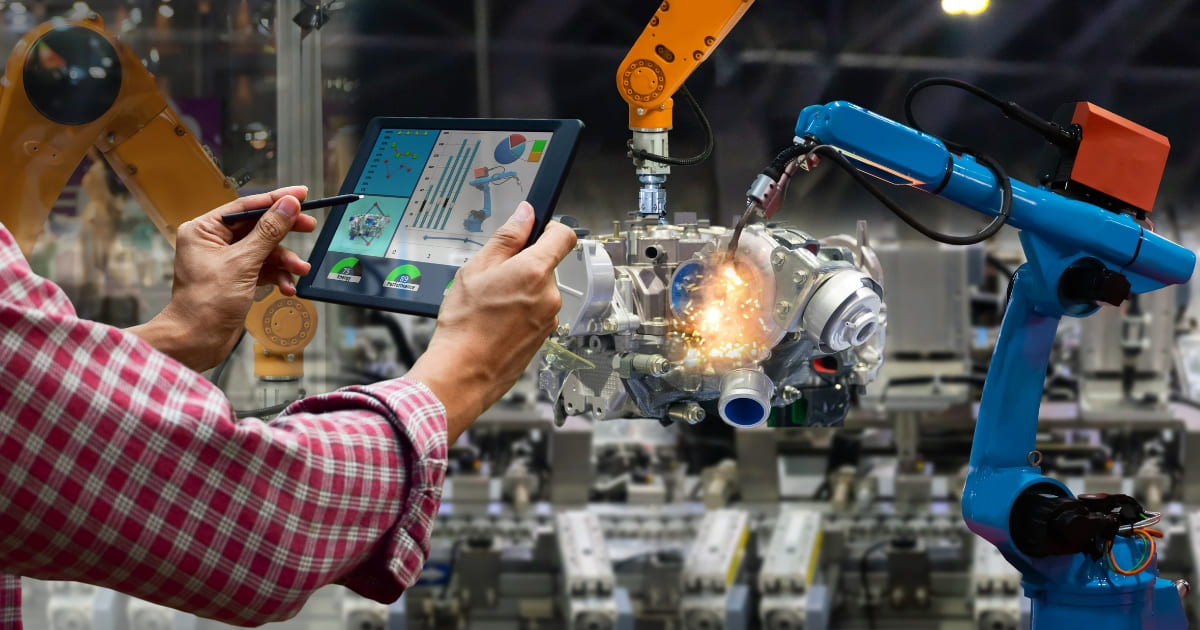
Manufacturing has always been a game of margins. Small improvements in speed, quality, or uptime translate directly into profit. AI tools for manufacturing deliver exactly those improvements at a pace manual methods cannot match.
- Start with focused pilots such as predictive maintenance or visual inspection to deliver measurable ROI within months.
- Prioritize AI tools that integrate with MES, ERP, and SCADA, offer real-time processing, and scale across plants without heavy reconfiguration.
- Involve engineers and frontline operators from day one; use low-code tools and rigorous measurement to expand proven pilots responsibly.
Industry data shows that manufacturers using AI report up to 30% fewer unplanned downtime events. Defect detection rates improve significantly when computer vision replaces human-only inspection. Supply chain forecasting becomes sharper when machine learning models process demand signals in real time.
The factories leading this shift are not all massive enterprises. Midsize manufacturers are adopting AI tools for manufacturing to compete with larger players. The barrier to entry has dropped, and the return on investment has never been clearer.
What Should You Look for in Manufacturing AI Tools?
Not every AI platform suits every production environment. Your choice should reflect your operations, workforce, and growth goals. Here are the factors that matter most:
- Integration with existing systems – The tool must connect with your MES, ERP, and SCADA infrastructure without rebuilding your tech stack.
- Real-time processing capability – Manufacturing moves fast. Your AI solution needs to analyze data and deliver insights in seconds, not hours.
- Scalability across facilities – A tool that works on one production line should expand to multiple plants without excessive reconfiguration.
- Ease of deployment – Look for low-code or no-code interfaces that your operations team can manage without a dedicated data science group.
- Proven industry use cases – Prioritize vendors with track records in your specific manufacturing vertical, whether automotive, electronics, food, or pharma.
These criteria shaped the following list of ten platforms making a measurable impact on factory floors today.
10 AI Tools for Manufacturing Worth Evaluating
1. Siemens Industrial Copilot — AI-Driven Factory Intelligence
Siemens Industrial Copilot brings generative AI directly into manufacturing workflows. It assists engineers with PLC code generation, process optimization, and troubleshooting. The tool sits within the Siemens Xcelerator ecosystem, making integration seamless for existing Siemens users.
Production teams use it to reduce programming time and accelerate commissioning. It also helps maintenance technicians diagnose equipment issues faster by analyzing historical fault data and suggesting root causes. For factories already running Siemens automation, this is a natural first step into AI.
2. Sight Machine — Manufacturing Data Platform
Sight Machine transforms raw production data into actionable intelligence. It connects to sensors, PLCs, and enterprise systems to build a unified digital twin of your manufacturing process. The platform then applies AI models to identify quality issues, waste patterns, and throughput bottlenecks.
Global manufacturers in automotive, consumer goods, and chemicals rely on Sight Machine to standardize analytics across multiple plants. Its Plant Digital Twin technology gives operations leaders a single source of truth for performance comparison and continuous improvement.
3. Uptake — Predictive Maintenance and Asset Intelligence
Uptake specializes in keeping equipment running. Its AI platform ingests sensor data from industrial assets and predicts failures before they cause unplanned downtime. Maintenance teams receive prioritized alerts with recommended actions, not just raw warnings.
The platform serves heavy industries including mining, energy, and discrete manufacturing. Uptake’s models learn from each asset’s unique operating history, improving accuracy over time. Companies using Uptake report meaningful reductions in maintenance costs and significant gains in asset availability.
4. Landing AI — Visual Inspection Powered by Computer Vision
Landing AI, founded by AI pioneer Andrew Ng, focuses on visual inspection for manufacturing. Its platform lets quality teams train computer vision models using small datasets, solving a common challenge in factories where defect examples are rare.
The tool identifies surface defects, assembly errors, and dimensional inconsistencies on production lines in real time. It supports deployment on edge devices directly at the inspection station. Electronics, automotive, and medical device manufacturers benefit most from Landing AI’s precision and adaptability.
5. Rockwell Automation (Plex + Fiix) — Smart Manufacturing Suite
Rockwell Automation combines its Plex smart manufacturing platform with Fiix, its AI-powered maintenance management system. Together, they cover production tracking, quality management, supply chain visibility, and predictive asset maintenance.
Plex provides cloud-native MES and ERP functionality purpose-built for manufacturing. Fiix uses AI to optimize maintenance scheduling and spare parts inventory. This combination appeals to midsize manufacturers seeking an integrated solution without the complexity of assembling multiple point solutions.
6. Cognite Data Fusion — Industrial Data Contextualization
Cognite Data Fusion acts as a connective layer between operational technology and AI applications. It ingests data from disparate industrial sources, contextualizes it, and makes it available for analytics, machine learning, and automation use cases.
Heavy asset industries like oil and gas, power generation, and process manufacturing use Cognite to unlock value from decades of siloed data. The platform accelerates time to insight by making operational data accessible to engineers, data scientists, and decision-makers without lengthy integration projects.
7. Augury — Machine Health Monitoring
Augury attaches wireless sensors to production equipment and uses AI to monitor vibration, temperature, and magnetic signals. The platform detects mechanical degradation early, giving maintenance teams weeks of warning before a breakdown.
Consumer packaged goods and food manufacturers are among Augury’s strongest adopters. The platform also provides process health insights that help operators maintain consistent product quality. Its subscription model keeps upfront costs manageable for manufacturers testing predictive maintenance for the first time.
8. Instrumental — AI for Electronics Manufacturing Quality
Instrumental focuses specifically on electronics and hardware manufacturing. Its platform captures high-resolution images at key assembly stages and uses AI to detect defects, process deviations, and yield loss root causes.
Engineering teams use Instrumental to accelerate new product introductions and reduce scrap rates. The tool provides traceable records for every unit produced, which supports compliance in regulated industries. Companies building complex electronics at scale find Instrumental’s targeted approach more effective than generic quality platforms.
9. Tulip — Composable Manufacturing Apps with AI
Tulip provides a no-code platform that lets manufacturing engineers build custom applications for production tracking, quality checks, work instructions, and machine monitoring. Its AI capabilities include anomaly detection, image classification, and natural language interfaces for shop floor data.
The platform connects directly to machines, sensors, and enterprise systems through built-in connectors. Frontline workers interact with Tulip apps on tablets and screens at their stations. This makes Tulip ideal for manufacturers who need flexibility to adapt workflows quickly without depending on IT teams.
10. Databricks for Manufacturing — Lakehouse AI at Scale
Databricks offers a unified data and AI platform that large manufacturers use to build custom machine learning models for demand forecasting, supply chain optimization, and quality prediction. Its lakehouse architecture handles the massive data volumes that manufacturing environments generate.
The platform supports collaboration between data engineers, data scientists, and operations analysts. Manufacturers with in-house analytics teams choose Databricks for the freedom to build proprietary AI models tailored to their exact processes. It integrates with major cloud providers and industrial data sources.
Quick Comparison: 10 AI Tools for Manufacturing
| Tool | Primary Use Case | Best For | Deployment Model |
|---|---|---|---|
| Siemens Industrial Copilot | Engineering and maintenance AI | Siemens ecosystem users | Cloud + edge |
| Sight Machine | Production analytics and digital twin | Multi-plant operations | Cloud |
| Uptake | Predictive maintenance | Heavy industry assets | Cloud |
| Landing AI | Visual defect inspection | Quality-critical production | Edge |
| Rockwell (Plex + Fiix) | MES, ERP, and maintenance | Midsize manufacturers | Cloud |
| Cognite Data Fusion | Industrial data integration | Data-heavy operations | Cloud |
| Augury | Machine health monitoring | CPG and food manufacturing | IoT + cloud |
| Instrumental | Electronics quality assurance | Hardware manufacturers | Cloud + edge |
| Tulip | Custom manufacturing apps | Flexible shop floor digitization | Cloud + edge |
| Databricks | Custom AI model development | Large-scale analytics teams | Cloud |
How to Start Using AI in Your Manufacturing Operations
Begin with a single high-impact problem. Predictive maintenance and visual quality inspection are two areas where AI delivers fast, measurable results. These projects require limited data preparation and show clear return within months.
Involve your operations team from day one. The best AI tools for manufacturing succeed when floor-level expertise shapes the implementation. Engineers and operators understand the context that algorithms need to produce useful outputs.
Set realistic expectations. AI will not transform your factory overnight. Start with a pilot line, measure results rigorously, and expand based on proven performance. Manufacturers who follow this disciplined approach consistently outperform those who try to deploy AI everywhere at once.
The Road Ahead for AI in Manufacturing
The next wave of intelligent production systems will combine multiple AI capabilities into unified workflows. Expect machines that self-diagnose, production lines that self-optimize, and supply chains that self-correct based on real-time market signals.
Generative AI is entering the factory through engineering copilots and natural language interfaces for operational data. Workers will interact with manufacturing systems using plain language rather than specialized software. This shift lowers the skill barrier and accelerates adoption across the workforce.
Manufacturers who invest in smart factory solutions today are building the infrastructure for autonomous operations tomorrow. The ten tools above represent the strongest entry points across quality, maintenance, production, and data intelligence.
FAQs
AI tools for manufacturing automate tasks like defect detection, predictive maintenance, demand forecasting, and production optimization. They analyze operational data in real time to reduce waste and improve throughput.
Costs vary based on scope and platform. SaaS-based tools may start at a few thousand USD per month, while enterprise deployments with custom models and hardware can reach six figures annually.
Yes. Platforms like Tulip, Augury, and Landing AI offer accessible entry points with low-code interfaces and subscription pricing. Small manufacturers often see faster ROI because improvements impact a larger share of operations.
Predictive maintenance uses AI to analyze sensor data from equipment and forecast failures before they happen. This reduces unplanned downtime, extends asset life, and lowers repair costs compared to reactive or scheduled maintenance.
Most manufacturers see measurable improvements within three to six months of deploying focused AI solutions. Predictive maintenance and visual inspection projects typically deliver the fastest returns due to clear baseline metrics.




 AI/ML Strategy and Consulting
 Data Science And Data Analytics
 Generative AI
 AI Consulting Services
 AI Automation Solutions
 API Integration